10 Best Baseball Hoodies for Wholesale Buyers?
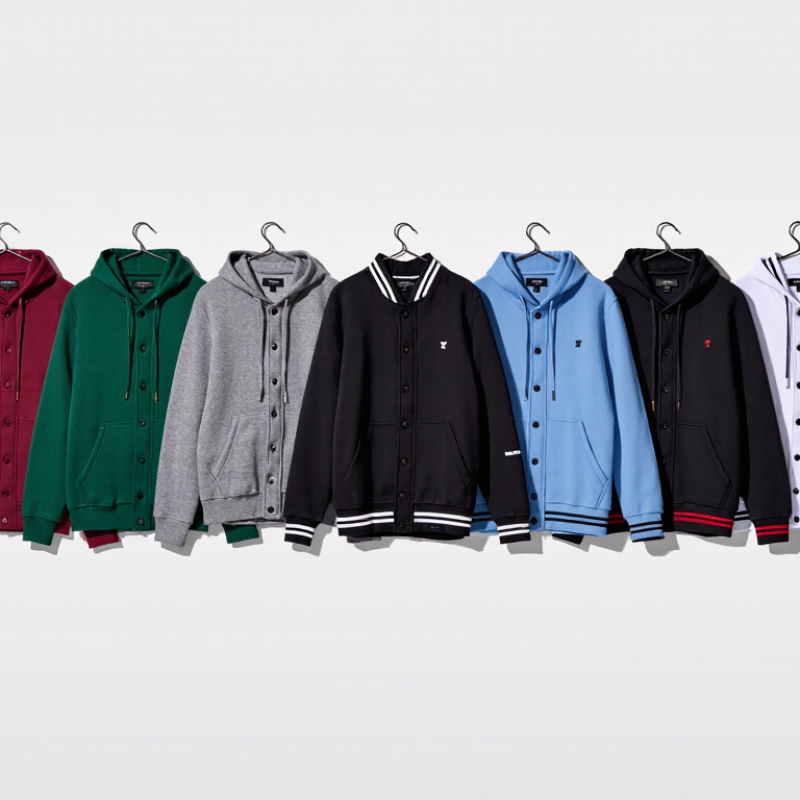
Choosing the right Baseball Hoodies for wholesale requires more than attractive team graphics. Buyers must examine fabric weight, stitching quality, sizing consistency, decoration options, and supplier reliability. A soft 280 GSM cotton blend may suit cool stadium evenings, while lighter fleece works better for spring promotions. Small details matter. Ribbed cuffs should recover after stretching. Zippers should move smoothly without catching. Printed logos should remain sharp after repeated washing.
This guide introduces ten strong Baseball Hoodies options for wholesale buyers. Each selection is considered through practical purchasing criteria, including minimum order quantities, sample availability, production timelines, color choices, and customization support. These factors can influence profit margins and customer satisfaction more than a trendy photograph. Experienced buyers should request physical samples before placing large orders. A hoodie may look excellent online but feel thin in hand.
There is no perfect option.
The best choice depends on your market, climate, budget, and sales channel. We also recognize that supplier data can change, and one evaluation may miss a regional preference. That is why careful buyers should verify current specifications, request recent product photos, and confirm shipping details directly. The following comparison aims to provide a dependable starting point, not an absolute verdict. It balances everyday wearability with wholesale practicality, helping businesses select Baseball Hoodies that look professional, perform consistently, and support long-term customer trust.
Wholesale Baseball Hoodie Market Overview and Buyer Requirements
Wholesale baseball hoodie demand is tied to team identity, outdoor training, and casual sportswear. Grand View Research valued the global sports apparel market at approximately USD 248.8 billion in 2023. It forecasts a 6.8% annual growth rate from 2024 to 2030. Baseball hoodies fit this wider movement, especially in school programs, local clubs, and event merchandise.
Fit comes first. Buyers should request size charts, sample measurements, and shrinkage results before placing volume orders. A practical wholesale hoodie needs a stable cotton-polyester blend, reinforced seams, smooth cuffs, and a hood that keeps its shape. Fabric weight also matters. Midweight fleece works across changing seasons, while heavier fleece suits colder stadium conditions. The Global Organic Textile Standard reports that certified materials require controlled processing and traceability, which can support more reliable sourcing claims.
Color consistency is often underestimated. Ask for lab dips, wash tests, and production tolerance limits. Minimum order quantities, repeat-order capacity, carton packing, and delivery windows should appear in the supplier agreement. Numbers need context. A low unit price may hide high defect rates or weak after-sales support. McKinsey’s 2024 sporting goods analysis noted uneven consumer demand across categories, so buyers should avoid ordering only from optimistic forecasts. Small pilot orders are safer, although they may reduce negotiating power.
Key Features to Evaluate in Baseball Hoodies
Wholesale baseball hoodies should be judged by performance, not appearance alone. The 2024 Textile Exchange Materials Market Report states that global fiber production reached about 124 million tonnes in 2023. Polyester represented roughly 57% of output. This matters because fiber choice affects drying speed, pilling, warmth, and recycling discussions. For active teams, evaluate a fabric blend that feels soft but remains breathable. A dense hood should keep its shape after repeated washing.
Fit requires practical testing. Measure chest width, sleeve length, hood depth, and rib recovery across several sizes. Ask for pre-production samples before placing a large order. Try them over a jersey, not only over a T-shirt. The wrong cut becomes obvious. The Grand View Research sports apparel report valued the global market at approximately 248 billion dollars in 2023, showing strong demand, but market growth does not guarantee consistent factory quality.
Wholesale buyers should inspect seam density, pocket reinforcement, drawcord safety, colorfastness, and print adhesion. Request test results based on recognized textile methods, such as AATCC laundering procedures or ISO dimensional-change testing. Review the supplier’s inspection records and ask how defects are separated before packing. Packaging should protect folded garments from moisture and compression damage. I once treated a low price as a useful advantage; it was not. Thin ribbing and uneven sizing created returns that erased the savings. Building a scorecard for fabric, construction, grading, testing, and delivery accuracy makes comparisons more reliable.
How to Choose Reliable Baseball Hoodie Suppliers
For wholesale buyers comparing the 10 best baseball hoodies, supplier reliability matters more than a polished catalog. The SFIA 2024 Topline Participation Report recorded about 15.6 million baseball participants in the United States during 2023. That demand rewards suppliers with stable sizing, repeatable colors, and dependable delivery. Ask for a pre-production sample, measurement chart, fabric composition, and a written production timeline. Check the hood drawcord, ribbed cuffs, seam strength, and pocket reinforcement. Small defects become expensive across 500 units.
Material verification deserves careful attention. Textile Exchange’s 2024 Materials Market Report estimated polyester represented roughly 57% of global fiber production in 2023. For polyester-rich hoodies, request fabric weight, recycled-content evidence when claimed, and colorfastness results. Cotton blends should include shrinkage testing after washing. A supplier should explain its inspection process, acceptable quality limits, carton labeling, and replacement policy. Request photos from several production stages, not only finished garments. Details matter.
Do not trust certificates alone. A strong audit can still hide inconsistent stitching or late packing. No checklist is perfect. Require a small trial order before committing to seasonal volume, then compare delivered measurements against the approved sample. Record defects by type and rate. Payment milestones, factory capacity, lead-time history, and communication speed should appear in your supplier scorecard. If answers remain vague, especially about testing or subcontracting, pause the order. Reliability is proven through repeated shipments, not confident promises.
10 Best Baseball Hoodies for Wholesale Buyers: How to Choose Reliable Suppliers
Recommended evaluation priorities for comparing baseball hoodie suppliers. The percentages represent a practical wholesale buyer scorecard, with product quality, delivery reliability, and cost control receiving the greatest weight.
How to use this chart: Request samples, confirm fabric and sizing specifications, review quality-control records, and verify production capacity before placing a wholesale order. A reliable supplier should perform consistently across all ten criteria rather than compete only on price.