China remains a major sourcing base for performance footwear, but supplier selection requires more than comparing factory prices. World Footwear’s 2024 Yearbook reports that China produced about 55% of the world’s footwear in 2023. This scale creates valuable manufacturing options for global buyers. It also creates uneven quality, communication, and compliance standards.
A reliable running sneaker supplier should demonstrate technical experience, not only product variety. Buyers should examine outsole rubber, foam density, heel-counter support, stitching strength, and repeated wear-test results. Factory audits, material traceability, and documented quality-control procedures matter. Useful evidence may include ISO 9001 systems, laboratory test reports, and suitable product certifications for the target market. The World Athletics Competition and Technical Rules also show why footwear dimensions, materials, and performance claims require careful review when products target competitive runners.
Cost still matters. However, the lowest quotation may hide higher defect rates, slower sampling, or inconsistent foam performance. Grand View Research identifies continued growth in the global athletic footwear market, increasing pressure on brands to deliver comfort, durability, and credible product stories. Suppliers with in-house development teams can improve fit testing and prototype revisions. That advantage is often visible in details, such as clean glue lines, balanced midsoles, and accurately labeled shoe boxes.
No supplier is perfect. A polished website proves little. Even experienced buyers can overvalue factory size or overlook seasonal capacity. This guide compares leading Chinese running sneaker suppliers through product capability, minimum order quantities, communication, testing, production control, and export experience. The goal is practical due diligence, not an easy ranking. Small trial orders and independent inspections remain wise. Sometimes, the safest decision is slower.
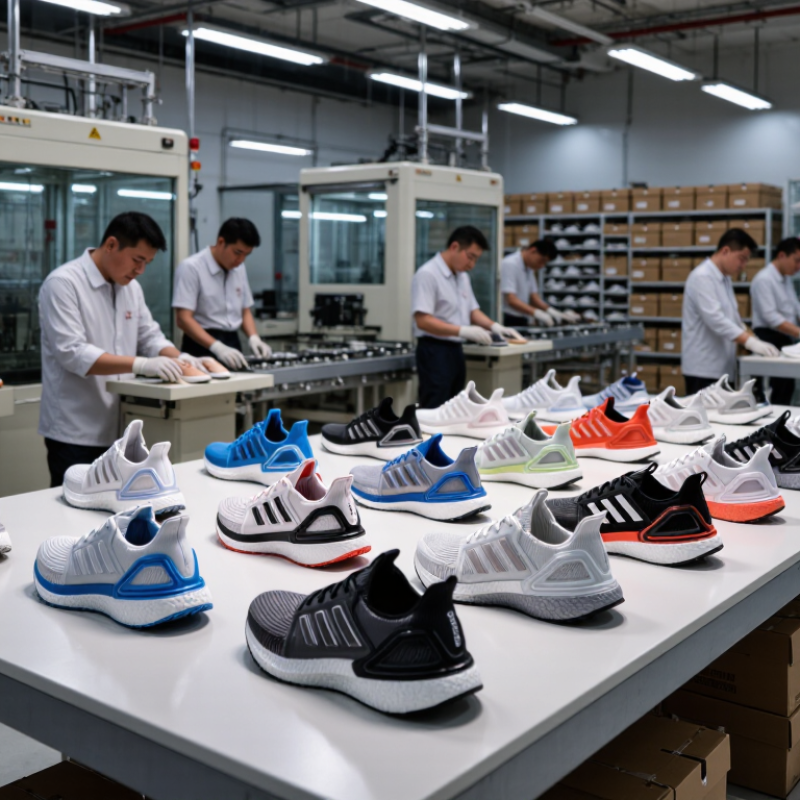
A reliable China running sneaker supplier offers more than attractive factory photos. The supplier should explain material grades, outsole compounds, production capacity, and testing methods clearly. World Footwear’s 2024 Yearbook reports that China produced more than half of global footwear in 2023. Scale matters, but scale alone does not prove consistency.
Experienced buyers should request a physical sample, a signed specification sheet, and recent inspection records. Check heel counter strength, bonding, flex resistance, cushioning recovery, and outsole abrasion. Ask whether the same materials will remain available during mass production. SGS and Intertek inspection data can support verification, but buyers should confirm the tested sample matches the shipped product. A perfect sample proves little. I have seen small color changes reveal poor process control.
Tips: Start with a modest trial order. Set measurable tolerances for weight, size, color, and glue marks. Use an independent pre-shipment inspection against the approved sample. An AQL-based plan can make defects easier to manage, though it cannot replace factory communication. Review response speed, corrective-action quality, and delivery history before negotiating a lower price. The cheapest offer may hide weaker foam, unstable sizing, or expensive rework. Ask difficult questions early. Suppliers that answer vaguely deserve slower trust.
Finding qualified China running sneaker manufacturers requires more than reviewing attractive product photos. Global buyers should verify factory experience, production capacity, material sourcing, and quality procedures. Ask for business licenses, recent export records, and clear factory addresses. A video tour can help, but it is not equal to an independent audit. The strongest suppliers explain their foam, mesh, outsole, and stitching choices in practical terms.
Tips: Request two or three samples in different sizes. Check heel stability, toe flexibility, bonding strength, and surface marks after repeated wear. Ask whether the sample uses production-line materials. Confirm minimum order quantities, development fees, lead times, packaging, and inspection terms in writing. Small details often expose larger problems.
A reliable manufacturer should provide test reports relevant to footwear safety and performance. Buyers should also confirm that labels, materials, and documentation meet destination-market requirements. Do not select a supplier only because its price is low. A cheaper outsole may harden quickly, while weak stitching can create costly returns. I have seen polished catalogs create false confidence; a factory may look professional yet struggle with consistent sizing. Use a staged order and record every approved specification. Some suppliers may resist detailed checks, which is a warning sign worth considering.
For global buyers, a running sneaker supplier should prove quality with repeatable evidence, not attractive samples. The World Footwear Yearbook 2024 reported nearly 23.9 billion pairs produced globally in 2023, with Asia supplying about 88%. This scale makes factory verification essential. Request batch records, material specifications, and third-party test reports before placing large orders.
Upper materials need clear composition data. Textile Exchange’s Materials Market Report 2024 estimated polyester represented about 57% of global fibre production in 2023. Ask whether the mesh is virgin or recycled, and verify recycled claims through GRS documentation. Check OEKO-TEX Standard 100 reports for harmful substances. For construction, test outsole abrasion, flex durability, bonding strength, lace-eyelet pull, and heel counter recovery. ISO 9001 supports quality management, but it does not guarantee a durable sneaker.
Tips: Ask for the exact test method, sample size, laboratory name, and report date. Compare production samples with approved samples under identical lighting. Inspect glue lines, stitching density, foam rebound, and outsole hardness. A supplier may show a valid certificate from another factory or expired scope. Verify the certificate holder, site address, and product category directly with the issuing organization. Look beyond the logo.
No checklist is perfect. A shoe may pass laboratory tests yet feel unstable during long runs. Conduct wear trials with different foot shapes, surfaces, and weather conditions. Record defects after 50, 100, and 200 kilometers. Small inconsistencies often reveal weak process control before customer complaints appear.
| Evaluation Dimension | Key Data Point | Recommended Reference or Requirement | Evidence to Request | Why It Matters for Global Buyers |
|---|---|---|---|---|
| Upper Material | Material composition and construction | Verify mesh, engineered textile, synthetic leather, or recycled-content claims against the approved specification and test report. | Material specification sheet, supplier declaration, colorfastness test, and physical sample. | The upper affects breathability, durability, fit consistency, appearance, and product labeling. |
| Midsole Performance | Foam type, density, cushioning retention, and compression behavior | Compare production samples with the approved sample using the same test method, conditioning, and measurement equipment. | Material data sheet, density results, compression-set data, and batch test records. | Midsole consistency influences comfort, shock absorption, weight, and service life. |
| Outsole Rubber | Compound, hardness, abrasion resistance, and wet-grip performance | Set buyer-defined limits for hardness, wear, and slip performance; do not rely on a generic “non-slip” claim. | Rubber compound specification, abrasion test, slip-resistance test, and outsole sample. | Outsole properties affect traction, durability, injury risk, and suitability for road or indoor use. |
| Adhesion and Bonding | Upper-to-sole bond strength and glue application consistency | Require documented bond-strength testing and visual inspection for open edges, glue overflow, and delamination. | Peel or adhesion test results, process-control records, and pre-shipment inspection report. | Poor bonding is a common failure mode that can cause premature sole separation. |
| Flexing Durability | Cracking, separation, and structural damage after repeated flexing | Use a buyer-approved footwear flexing method and define the number of cycles and failure criteria before production. | Laboratory flexing report, test photographs, and retained production samples. | Running footwear experiences repeated bending at the forefoot during normal use. |
| Dimensional and Fit Control | Last dimensions, size grading, foot length, width, and pair matching | Approve a measurement chart and tolerance range for each size; verify left-right symmetry and carton size labeling. | Technical drawings, size-set samples, measurement report, and grading records. | Accurate sizing reduces returns and supports consistent sales across different markets. |
| Chemical Compliance | Restricted substances in textiles, rubber, adhesives, inks, and packaging | For EU sales, assess applicable REACH requirements; for U.S. sales, assess applicable federal, state, and children’s-product requirements. | Recent third-party chemical test report covering all relevant materials and components. | Chemical rules vary by destination market, product category, and intended user age. |
| Quality Management System | Documented control of purchasing, production, inspection, nonconformities, and corrective actions | ISO 9001 certification can support system evaluation, but it does not by itself prove footwear performance. | Valid certificate, certification scope, issuing body, audit status, and internal quality procedures. | A functioning quality system improves repeatability and traceability across production batches. |
| Environmental Management | Energy, waste, water, chemical, and environmental-control processes | ISO 14001 may indicate an environmental management framework; verify the certificate scope and current validity. | Certificate, environmental policy, waste records, and material-specific sustainability evidence. | Environmental claims should be supported by documented processes rather than marketing language alone. |
| Factory and Social Compliance | Worker safety, working hours, wages, age verification, and grievance procedures | Use a recognized buyer code of conduct and an independent social-audit process appropriate to the sourcing program. | Recent audit report, corrective-action plan, factory license, and production-site address verification. | Responsible sourcing reduces legal, reputational, and supply-chain disruption risks. |
| Laboratory Capability | Availability of calibrated equipment and competent test personnel | For independent results, consider laboratories accredited to ISO/IEC 17025 for the specific test scope. | Accreditation scope, calibration certificates, test methods, sample identification, and report dates. | Accreditation supports technical competence, but each report still needs method and sample verification. |
| Production Capacity | Monthly output, production lines, lead time, minimum order quantity, and peak-season availability | Validate capacity using production records and a pilot order rather than relying only on stated figures. | Capacity plan, line photos or audit evidence, production schedule, and confirmed lead-time history. | Capacity alignment helps prevent late delivery, rushed production, and inconsistent quality. |
| Traceability | Traceability from raw materials to finished pairs and shipment cartons | Require batch, lot, date, line, and inspection-record references that can be linked to purchase-order documentation. | Material receiving records, batch codes, production logs, inspection reports, and carton labels. | Traceability speeds root-cause analysis and targeted recalls if a problem occurs. |
| Pre-Shipment Inspection | Defect rate, workmanship, measurements, packaging, and quantity | Use an agreed sampling plan, such as an applicable ANSI/ASQ Z1.4-based plan, with written critical, major, and minor defect limits. | Inspection protocol, random-sample photos, defect classification, quantity check, and signed report. | Independent inspection provides an objective release decision before shipment. |
| Packaging and Labeling | Carton strength, moisture protection, product labels, size marks, country-of-origin data, and recycling information | Confirm destination-market labeling, packaging, language, and importer requirements before mass production. | Approved artwork, packaging specification, carton drop or handling test, and label compliance checklist. | Correct labeling and packaging reduce customs issues, damage, and consumer complaints. |
| Sample-to-Bulk Consistency | Differences between approved samples and mass-production pairs | Approve a sealed reference sample, golden-size sample, color standard, bill of materials, and workmanship standard before production. | Signed sample approval, pre-production meeting record, first-article inspection, and retained bulk sample. | Formal approval controls help ensure that delivered goods match the product originally evaluated. |
Supplier quotes often show only the factory price. That is rarely the full cost. Add sample fees, mold adjustments, testing, packaging, freight, import duties, and payment charges. A practical starting range for development samples is 80 to 250 US dollars per pair, depending on materials and construction. Custom molds can add several hundred dollars or more.
Minimum order quantities commonly range from 300 to 1,000 pairs per color. Some factories accept smaller pilot orders, but the unit price usually rises. Ask whether the MOQ applies to each color, size range, or total order. This detail can change your budget quickly. I have seen buyers calculate 500 pairs, then discover that every color requires 500 pairs.
Sample development may take 7 to 15 days after receiving complete specifications. Production often needs 30 to 60 days after sample approval and deposit payment. Complex soles, special fabrics, or seasonal factory demand can extend this period. Add shipping time separately. Sea freight may take several weeks, while air freight costs much more. Not always simple.
Before choosing a supplier, request a written cost breakdown, production schedule, material list, and quality inspection plan. Confirm acceptable tolerances for stitching, bonding, size, and color. A cheaper quote can become expensive after revisions. My own costing reviews sometimes miss small packaging charges, so I now check every line twice.
China remains a major sourcing base for running sneakers. The World Footwear Yearbook 2024 estimates that China produced about 55.5% of global footwear in 2023. This capacity supports flexible sampling and large-volume production. Buyers should send a precise tech pack, including mesh density, foam hardness, outsole rubber, logo placement, and size grading. Request one development sample, then a revised sample after testing. A perfect first sample is uncommon.
Customization needs written control. Confirm material alternatives, color references, mold ownership, minimum order quantities, and acceptable defect levels. Keep one approved sample with dated photos and signed measurements. The World Footwear Yearbook 2024 also reports that global footwear consumption reached approximately 23.9 billion pairs in 2023, making consistency more important than attractive prototypes. For shipping, UNCTAD’s Review of Maritime Transport 2024 states that over 80% of world merchandise trade moves by sea. Compare sea, rail, and air quotes using the same carton dimensions and Incoterms. Ask for a pre-shipment inspection before releasing the balance.
Tips: Build a sample calendar with buffer days. Separate development fees from production costs. Check carton strength and moisture protection. Confirm the commercial invoice, packing list, and destination requirements early. Some suppliers promise fast sampling, but revisions often extend the timeline. That gap deserves honest planning.