How to Choose the Best Sports Sneakers for Your Needs?
Choosing the right sports sneakers can be overwhelming. With countless brands and styles, making a decision may feel daunting. However, understanding your specific needs can simplify the process. Sports sneakers are essential for both performance and comfort, whether you’re running, playing basketball, or hitting the gym.
Consider your foot type and activity level. Each sport may require a unique design and support. Some sneakers focus on cushioning, while others prioritize stability. Don’t forget to check the material. Breathable fabrics keep your feet dry during intense workouts. Additionally, pay attention to fit. A good fit enhances performance and reduces injury risk.
It’s crucial to evaluate user reviews and expert recommendations. Learning from others can guide your choices. However, personal preference also matters. Everyone's feet and activities are different. Reflect on your experiences with previous sneakers. This reflection will help you make an informed decision. By considering these factors, you can confidently choose the best sports sneakers for your needs.
Factors to Consider When Choosing Sports Sneakers for Different Activities
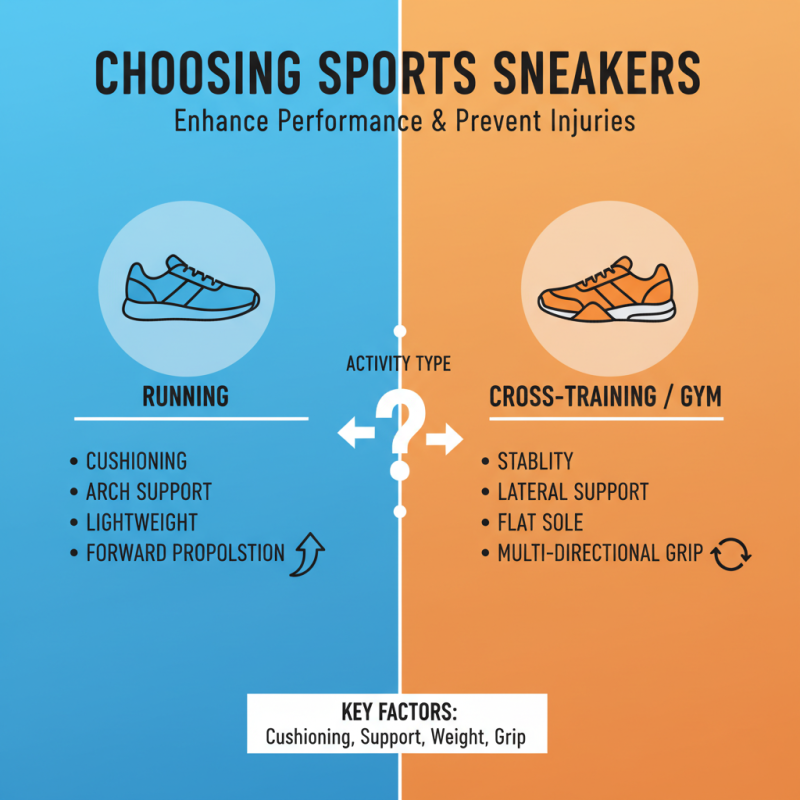
Choosing the right sports sneakers is essential for enhancing your performance and preventing injuries. One crucial factor is the type of activity you’ll be engaging in. For running, look for shoes that offer ample cushioning and support. You need propulsion for forward movement, so a lightweight design is ideal.
If you're into cross-training, stability becomes more critical. Your sneakers need to handle various movements, from lateral jumps to quick pivots. Opt for shoes with a firmer midsole and a versatile tread pattern. This provides grip and support for diverse workouts.
Another aspect to consider is fit. Every brand has a different sizing chart. Try on multiple pairs to find the best feel. Don’t rush this choice; the right fit makes a significant difference. Sometimes, you might feel like a shoe offers good comfort, only to realize that it's not suitable for your foot shape after extended use. Pay attention to these nuances. They can guide you to a better selection.
The Importance of Fit: How Proper Sizing Impacts Performance and Comfort
When selecting sports sneakers, fit is paramount. One size does not fit all. Proper sizing can significantly impact your athletic performance. Ill-fitting shoes may lead to blisters, calluses, or even serious injuries. An uncomfortable fit can distract you during training or competition.
Measure your feet regularly. Sizes can change over time. Consider the width, not just the length. Some athletes may require a wider toe box. Others might need extra support for arches. Don’t hesitate to try different styles and brands. A shoe that feels perfect in the store may not be suitable after a few miles.
Listen to your body during workouts. If you experience discomfort, reevaluate your choice. It’s not just about looks; function is key. Transparency about fit provides clarity on performance. Taking the time to find the right fit may boost your confidence and enhance endurance. A good pair of sneakers should feel like an extension of your foot, not a burden.
Material and Technology: Analyzing the Latest Innovations in Sports Footwear
When choosing sports sneakers, understanding material and technology is crucial. Recent reports indicate that advanced materials significantly impact performance. For instance, lightweight meshes can reduce shoe weight by over 20%.
Breathability plays a major role, especially for runners. Shoes with moisture-wicking fabrics can keep feet dry and comfortable, enhancing overall performance.
Innovations in cushioning technology also deserve attention. EVA foam remains popular, yet new alternatives offer improved energy return. Some studies suggest that athletes can experience up to 25% better responsiveness with these newer materials. However, the right balance between cushioning and stability can be tricky. Too much cushioning may lead to instability, potentially increasing injury risk.
Lastly, consider the life cycle of the materials used. Many sneakers incorporate recyclable or sustainable materials, addressing environmental concerns. Still, the durability of these innovative materials may not match traditional options. This aspect requires careful consideration, as a recurring need for replacements can undermine sustainability efforts. Achieving the right fit for your needs involves balancing these technological advancements with practical concerns.
Understanding Foot Types: Selecting Sneakers Based on Arch and Gait Analysis
Choosing the right sports sneakers hinges heavily on understanding your foot type. Recognizing your arch height and gait can significantly impact performance and injury prevention. A 2022 study published in the Journal of Foot and Ankle Research found that 70% of runners choose sneakers that do not support their unique foot characteristics. This mismatch can lead to discomfort and even chronic injuries.
When analyzing your arch type—flat, medium, or high—specific footwear features become crucial. For flat-footed individuals, stability sneakers with firmer midsoles offer support. In contrast, those with high arches often require cushioning to absorb shock efficiently. Gait analysis helps unveil your natural running style, allowing for further tailored sneaker selection.
Tips: Test sneakers by walking or jogging in-store. Pay attention to any discomfort or pressure points. Experts recommend trying on shoes late in the day when feet naturally swell. This ensures a better fit.
Consider using insoles for added arch support. A 2021 report from the American Podiatric Medical Association emphasizes that custom insoles can enhance stability by 30%. It’s essential to check how your sneakers perform over a few weeks. If you still feel discomfort, seek a professional opinion. Injury prevention is more complex than it seems. Knowing your foot type can make all the difference.
Evaluating Cushioning and Support: What Research Says About Injury Prevention
When it comes to choosing sports sneakers, cushioning and support play a pivotal role in injury prevention. Research shows that adequate cushioning can reduce stress on joints during high-impact activities. This is particularly important for runners, as the repetitive stress can lead to injuries like shin splints or plantar fasciitis.
Look for sneakers that provide a balance between cushioning and responsiveness. Too much cushioning might feel soft but can hinder stability.
Support is equally crucial. Different foot arches require different types of support. Individuals with flat feet may need more stability to control their movements, while those with high arches might benefit from softer cushioning.
It's essential to test sneakers by walking or running in them. Your experience in any pair can differ from the latest trend. Pay attention to how they feel around the heel and arch. Reflect on any discomfort; it's a sign to explore other options. Trial and error can lead you to the right pair that offers protection during your sporting activities.